
Views: 0 Author: Site Editor Publish Time: 2026-11-23 Origin: Site


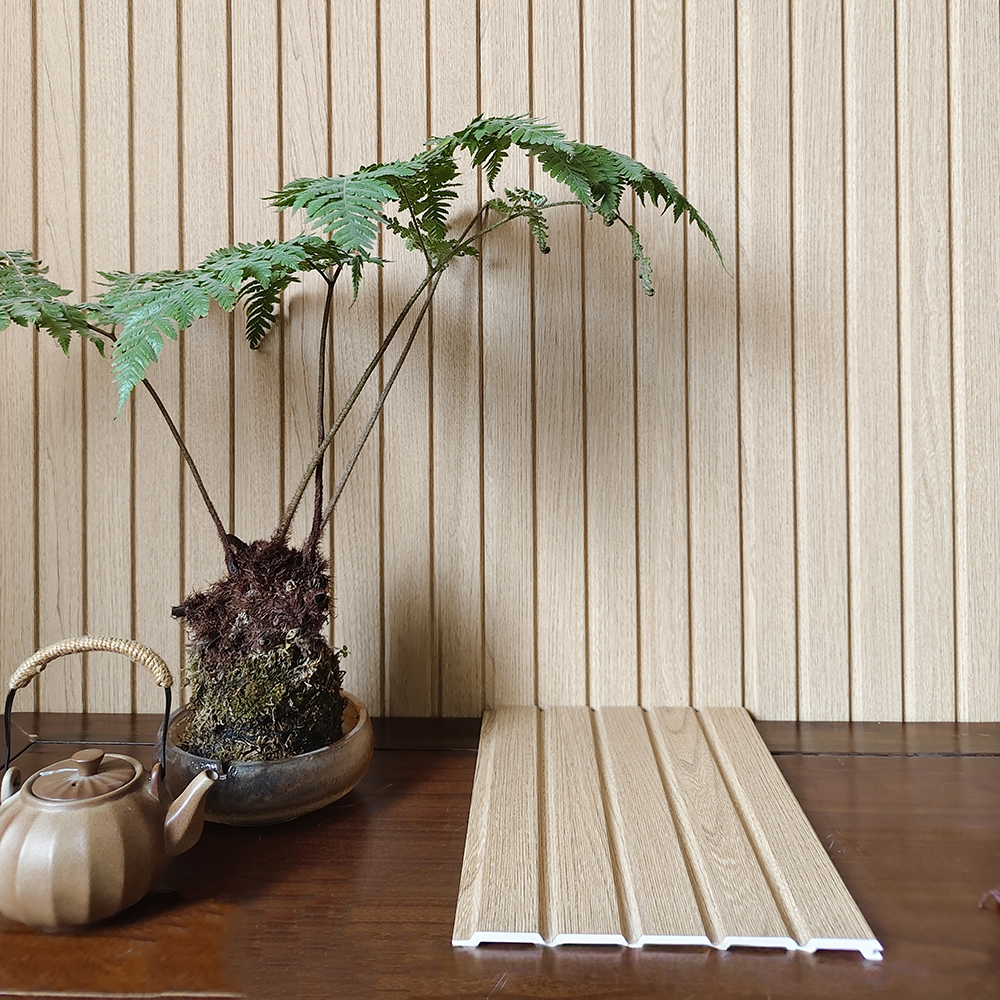
Interior WPC wall panels bring colour, texture and a repeated profile to a room. On a fluted design, the broad faces and recessed channels do different visual work: the faces show the decorative finish, while the grooves create shadow and rhythm. A care routine needs to respect both. Simply pressing a cloth harder into a channel can increase contact without improving the result.
For WPC wall panel cleaning, begin with the care instructions for the exact panel and finish. Different decorative surfaces can need different treatment. Once the permitted method is clear, the practical aim is straightforward: remove loose dust gently, address individual marks carefully and preserve a consistent appearance across the wall.
First view the wall in its usual room lighting. A dark line inside a groove may be the intended shadow of the profile rather than a deposit. Look at several adjacent channels and compare them with the raised faces. This helps identify where attention is needed without treating every dark line as a stain.
The light wood-look panel shown with this article illustrates that distinction. Its vertical relief remains visible beside the matching sample in the foreground. The photograph is a product and decorative reference, not a demonstration of a cleaning method.
Use a clean, soft, non-abrasive tool compatible with the finish, following the panel's care directions. Work in a small area with light contact. Turn or replace a dusty section of cloth as you move across the surface so that collected particles are not repeatedly rubbed over the same decorative face.
Keep the first pass simple. Loose dust and an attached mark are different problems; adding moisture or a cleaning product at the outset can make it harder to judge which one is present. After dust removal, look again before deciding whether another treatment is necessary.
A broad cloth can pass over raised faces while barely contacting the recess between them. If the selected finish permits a soft brush or a folded cloth, choose a size that reaches the accessible part of the channel without forcing it into place. Move lightly along the visible profile and lift away the collected dust.
The groove is not a slot to scrape. A hard edge, pointed tool or tightly jammed implement can concentrate force on a small part of the surface. If a recess cannot be reached with a permitted soft tool and gentle contact, seek the product's care guidance rather than increasing pressure.
Once loose dust is gone, inspect any remaining mark. Note whether it sits on a raised face, at the edge of a groove or close to a panel joint. Also consider what caused it, if known. That information is more useful than repeatedly rubbing the whole wall with progressively stronger products.
For an unfamiliar stain, ask for advice covering the exact finish and the substance involved. A cleaning method published for another WPC range, a different decorative film or an older panel model should not automatically become the treatment for this surface.
Use a damp cloth or cleaning product only when the selected model's maintenance instructions allow it. Follow those instructions for application, contact time and any removal or drying step. The label on a household product alone does not establish that it is suitable for a particular decorative wall finish.
Where a treatment trial is permitted, choose a small, unobtrusive area and assess the result before extending it. Look for a change in colour, sheen or texture as well as whether the mark has disappeared. Do not substitute a universal soap, alcohol or solvent recipe for product-specific directions.
Permission to damp-clean a face also does not establish that joints, cut edges or the complete installed wall are waterproof. Keep routine surface care separate from decisions about wet-area installation and moisture exposure; those depend on the specified panel and installation system.
After the permitted care steps are complete, view the cleaned area beside an untreated section under the same light. If damp care was allowed, wait for the surface to reach the condition described in its instructions before judging the finish. A temporary wet patch can make a comparison misleading.
Check the raised faces and the recesses together. An isolated glossy patch, colour difference or persistent mark deserves a pause and specific advice. Repeated hard rubbing is not a reliable way to restore visual consistency, especially when the finish and the source of the mark are uncertain.
Plants, teapots and other decorative objects can complement a wood-look wall, as the accompanying photograph shows. When moving nearby furniture or accessories, allow clearance so that their edges do not scrape across the panel. Remove objects from the immediate work area when they obstruct gentle access.
Arrange plant watering and the handling of drinks so that the wall does not receive unnecessary splashes. These simple habits keep decorative use and panel care connected without assuming a particular level of stain resistance or water resistance.
Let visible dust, the room's use and the product's maintenance guidance determine when care is needed. There is no need to invent one cleaning interval for every interior. A clear routine is to inspect the profile, remove loose dust with a compatible soft tool, then address only the marks that remain using an approved method.
For details about the panel and finish you are considering, contact WITOP Decor and request the corresponding care information. Confirming the appropriate method early helps keep the decorative faces and recessed lines looking consistent in everyday use.
WITOP Decor | Contact: +86 18853910723
